
I came across a business news article that mentioned this site and decided to check it out. Blank-label.com is a co-creation site that lets users design their own dress shirts (at the moment, only men's shirts are offered, though). First, you pick the fabric of your shirt, and then the style of the cuffs, collar, placket, pocket and shoulders. Next, you can individualize buttons, create a monogram, and design a label. Finally, you get to individualize sleeve length, collar size and fit preference. Shirts start at $55 and add-ons cost and additional $2-$12.
Overall, the site is well-designed and the whole creation process is really easy and user-friendly. I think a great next step for the company would be to introduce a women's shirt as this is an idea that I could see appealing to a lot of women.
Abortion is a highly politicized  topic with important ramifications. The decision to abort a pregnancy is extremely personal in nature and one that typically entails substantial anguish. Well, that was then; this is now. Pete and Alisha Arnold of Apple Valley, Minnesota, who are currently struggling with this difficult dilemma, have decided to elicit the power of the Internet to help them reach a decision. They have created a blog for their unborn child (birthornot.com) and are asking for your help. On this blog, you can learn more about them, see an ultrasound image of their unborn baby ("Wiggles") and vote whether or not they should have an abortion. Their tagline claims, "You can vote and choose whether we abort or keep our unborn child." They claim that they will follow the wisdom of the crowd (The final day for votes is December 9). In essence, they appear to be engaged in co-creating an abortion. Is this democracy in action or an example of really bad parenting?
In this YouTube clip, Sir Ken Robinson, a world-renowned education and creativity expert discusses the modern paradigm of education in an RSA Animate production. This caricatured interpretation of our nation's obsession with the "ADHD epidemic" explains why our standardized system of educating children should be taken in a different direction.
Robinson explains that our education is modeled on the concept of industrialization; we need to move away from this production line mentality. This runs parallel to the evolving concepts of product development and consumer co-creation that we talk about in class. Children should be encouraged to learn by expressing their ideas and understanding that there are a lot of possible answers to the questions they face. Robinson says "most great learning happens in groups," and that classroom cheating should be simply labeled as collaboration. The consumer world is changing, so the same concept should trickle down into our educational models.
Why Consumers Engage in Virtual New Product Developments Initiated by Producers
1 comments Posted by Talia at 1:27 PM
In lecture, we have discussed the various forms of user innovation and consumer involvement. We have explored the different forms of user innovation, engaged in our own user innovation and discussed the different processes in which we do participate in. However, what is the underlying reason as to why we do it? What are the motivations? In class we touched on this topic a bit, but this article explores it much more and gives different insights on this idea.
This article (by Johann Füller at the University of Innsbruck) discusses the intrinsic and extrinsic motivations that consumers go through when participating in product development, as well as identifying eleven basic motivations felt by consumers. The article describes a study done to determine these motivations and outlines the results and their significance.
I found this article intriguing because I could identify with many of the motivations when I was completing my class exercises. As you read this article, think about what motivations you identified with most during the exercises you did (Jones Soda, Lego Design, Wikipedia, etc.). Enjoy!

Customer collaboration and co-creation are relatively new ideas. However, as we have seen in class and through readings, more and more companies are taking on these practices and many new companies are solely based off these practices. Gaurav Bhalla, a strategy, innovation, and marketing professional with global experience, examined how customer collaboration and co-creation are becoming mainstream business practices. The ideas are being featured in many conferences around the world with companies like Local Motors being in the spotlight. Further, nonprofit organizations and government agencies are taking advantage of these strategies. See Global Pulse 2010, which was put into place after Obama's speech delivered to the Muslim world in Cairo. It was "a 3 day online collaboration and global conversation" attracting participants from over 155 countries resulting in about 10,000 ideas and opinions. We see here that this idea of collaboration and co-creation can span across cultures. The best part about it- all of us can contribute in any which way. Raj Shah, a key organizer of Global Pulse 2010 quotes, "By listening to each other and collaborating, each of us can become an agent of change and contribute to innovative and sustainable solutions to local and international challenges."

Jay Rogers is revolutionizing the US auto industry via his new start-up, Local Motors, which is currently offering the world's first co-created car, the Rally Fighter in Chandler, Arizona. Here is a recent video of Jay explaining what Local Motors is all about, his motivation for starting this operation and his life journey. Fascinating stuff!

As I was doing some company research for an upcoming interview with General Mills I came across this part of their website. It's called General Mills Worldwide Innovation Network or G-Win. The whole concept of the program is very similar to the concept InnoCentive uses. For those not familiar with InnoCentive, this is a site that links companies who have problems they cannot solve with people who want to solve these problems. Of course the winning idea receives a substantial amount of prize money from the companies who submit a problem. General Mills has taken this same underlying idea, but are instead going directly through the company website.
One thing that stood out to me the most was under the "submission process" page. General Mills offers the opportunity to collaborate on the problems if the solvers feel it could be of help. My Marketing 440 class just discussed a case about InnoCentive switching to collaboration. Most people felt it would not help the amount of problems solved. Does anyone think the collaboration option would help General Mills and G-Win?
This General Mills Program makes me wonder if other companies are taking this initiative and posting their own problems on a company run website, instead of a site like InnoCentive, in hopes a solver will figure out their problems. Maybe I will stumble upon more companies using this problem solving concept as I research more companies in the future!
This video by Steve Johnson does a nice job of illustrating, pun intended, innovation. I particularly like his inclusion of the history of innovation, noting that both collaboration and collision of ideas is necessary for innovation to occur.
You can view the video at http://kottke.org/10/09/where-good-ideas-come-from

Recent research by the Nielsen company (a long-time benefactor of the WSOB) provides new evidence that senior managers of CPG firms are more likely to harm (rather than help) innovation. Interestingly, a firm's innovation efforts seem to be harmed by even being physically close to to a firm's headquarters. Although this news release doesn't provide an explanation for this effect, it is likely that most senior managers share little in common with their firm's average customers. Thus, they are likely to have little direct knowledge of their customers' needs. To address this knowledge gap, a growing number of CPG firms such as P&G and Kraft are allowing their customers to become more actively involved in the innovation process.
In an age when video games are differentiated by specifics such as HD graphic resolution, Sony sought to take a step backwards and develop a product with broad enough appeal to attract as many consumers as possible. This challenge, however, did not rely on piecing together the ultimate gamer market segmentation report. Rather, Sony needed to create an approach that did this groundwork for them, fast. The Wii gamer segment, where users are personalizing their machines and game profiles to interact with an online community, is growing steadily and, most recently, out-sold Sony's PS3 over 4 to 1 (http://www.1up.com/do/newsStory?cId=3171305). Further, video game production costs, 3 years ago, ranged between $3 million and $6 million (http://news.bbc.co.uk/1/hi/technology/4442346.stm). Estimates today place costs upwards of $20 million. New video games, thus, need relatively strong ROI.
So, t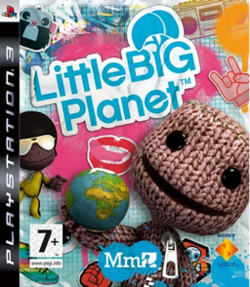

While there were 50 pre-built levels included with the game, Sony looks to the community of LBP gamers to create worlds of play applicable to their demographic or something to which their segment is emotionally tied. For example, there is an up-cropping of worlds resembling the early Mario Brothers games. This 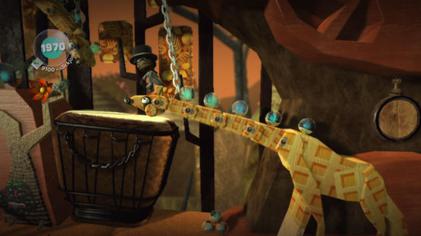
Another interesting and, perhaps, more poignant insight is that this same approach and capability, including all the community communication elements, were available for PC games decades ago. Sony's LBP model is hardly a new concept for innovation. Yet, perhaps users were not yet conditioned to develop and share as readily as they are today.

The concept is not new, and many have struggled to market similar solutions in the past, including Rocket Network and ProTools. Most competitors focus on live collaboration (jamming) or remixing, while Indaba seeks to improve traditional, asynchronous multitrack recording. Indaba has taken the lead among pro and semi-professional musicians by combining social networking with a web application that allows users to mix and edit audio in their browsers.
There are currently over 75,000 registered users from 150 countries, including many talented session musicians. Indaba encourages participation through frequent contests and crowd-sourcing in partnership with indie bands and labels. If it continues to grow in membership and quality, Indaba has the potential to compete with traditional record labels through its cooperative, grass roots approach to creating music.
Customer Co-creation -- The Secret Sauce for Today's Top Global Web Sites
6 comments Posted by Adam B. Needles at 1:00 PM
I was conducting research on the topic of Internet marketing in the era of Web 2.0, and I ran across some interesting data points. In the early years of Web growth, ad-supported news content and consumer e-mail were the two greatest drivers of the top global Web sites such as Yahoo!. But trends such as social networking and blogging have changed this dynamic.
Two data points speak to how much this has changed -- especially with respect to how much customer co-creation is driving the future of the Web:
> Growth among traditional, ad-driven news sites is flat: "[O]nline news audience growth is flat and the market is highly fragmented, with nearly one-half of traffic going to sites that are below the top 100 news sites," according to a press release from technology industry analyst firm Jupiter Research from March of this year. And this is even as the number of Web sites globally continues to grow at a rediculous pace.
> Participation dominates the top global Web sites: Among the top 10 Web sites globally, according to Internet site tracking service Alexa, 5 out of those 10 are now based on user-generated content -- i.e., they are social media, social networking or user-contributed media sites. The list includes: YouTube (3), Facebook (5), MySpace (7), Wikipedia (8) and Blogger.com (9).
Do you have any examples of acceleration of this paradigm shift? If so, please share them.

The creative ability of a collection of distant and disaggregated individuals is clearly evident across a number of open-source offerings, including Linux, Mozilla Firefox, and Wikipedia, among others. In recent years, the power of co-creation has been harnessed by a number of corporations, including Ducati, General Mills, and Procter & Gamble and is being widely advocated by a number of recent business tomes, including Democratizing Innovation, Outside Innovation, and The New Age of Innovation. Clearly, customer co-creation is a hot topic and one that will likely attract increasing interest in the near future. Given its recency and the exhuberence expressed by its proponents, it is difficult to decipher the limits of this new innovation technique. Are there any realms where co-creation can't work or shouldn't be applied?
An initial look into the limits of co-creation is provided by Penguin Publishing's recently failed wiki-experiment, A Million Penguins. Essentially, Penguin experimented with the idea of co-creating a novel by applying the logic, principles, and techniques of open-source software. Penguin launched this initiative on its corporate website in early February 2007 and shut it down (due to the overwhelming volume of contributions) approximately one month later. During this brief period, nearly 1,500 authors contributed approximately 11,000 edits. Thus, from a contribution standpoint, this experiment might be considered a success. However, The finished product is a collection of 1,030 pages of chaotic and inchoate prose laden with disjointed paragraphs and a direction-less plot. Those interested in exploring what when wrong (as well as right) should check out both the brief post-mortem provided in Penguin's blog as well as a recent academic investigation of this experiment by Bruce Mason and Sue Thomas of the Institute for Creative Technologies at De Montfort University (UK). Both reports identify a number of problems with this experiment, including creative divergence among its contributors, the technological limits of the wiki-platform, and vandalism, among others. If nothing else, Penguin's experiment presents the co-creation movement with a bit of irony: Although we can write books about co-creation, co-creating a book seems beyond our limits.

